Restart Weight Loss After a GLP-1 Plateau: Clinician Checklist
A GLP-1 plateau usually means your body has settled into a new weight equilibrium at your current dose, not that the medication has stopped working. The right first move is to confirm you’re taking it correctly, and never to stop it on your own. Contact your clinician for a focused review before changing anything.
TL;DR:
- Most weight loss plateaus occur within 12 to 18 months as the body’s physiology adapts and energy expenditure decreases, not because the medication stops working.
- Reversible causes like improper injection technique, poor medication storage, dietary changes, or medical issues such as hypothyroidism should be ruled out before considering a true biological plateau.
- Confirming you have reached your maximum tolerated dose is crucial, as many patients stall mid-titration, and increasing the dose may resume progress.
- Switching to a more effective medication, such as tirzepatide, or escalating the dose can help break a confirmed true plateau, especially if adherence and medical factors are optimized.
- Long-term management and adjustments should be guided by a clinician through a thorough review, with patience of four to six weeks before expecting results from any change.
Table of Contents
- What Is a GLP-1 Plateau, and Why Does It Happen?
- Ruling Out Treatable Causes Before Blaming the Plateau
- What Clinicians Typically Do Once a True Plateau Is Confirmed
- Nutrition and Exercise Changes That Actually Move the Needle
- What to Expect After You Make a Change
- How Supervised Telehealth Care Handles a Plateau
- A Plateau Is a Decision Point, Not a Failure
- Get a Clinician-Guided Plan for Your Next Step
- Sources
- FAQ
What Is a GLP-1 Plateau, and Why Does It Happen?
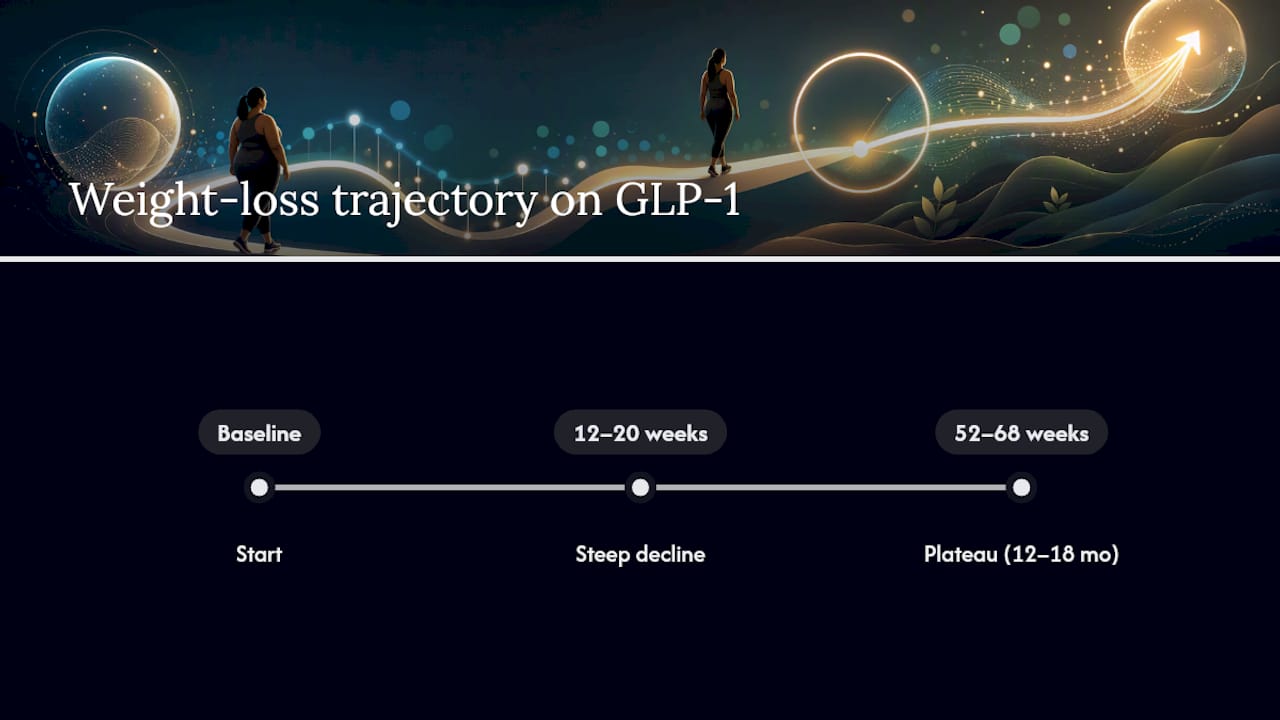
Weight loss on GLP-1 receptor agonists follows a predictable curve, and the plateau is part of that curve, not a deviation from it. Clinical trial data show the steepest drops happen in the first 12 to 20 weeks of treatment, with the rate of loss gradually flattening as the body adapts. Modeling built from trial and physiology data on the weight loss plateau shows curves commonly leveling off by weeks 52 to 68, which lines up with the 12 to 18 month window where most patients notice their weight stop moving.
Several physiological forces converge at once to produce this flattening. As you lose weight, your body requires fewer calories to maintain itself, a shift compounded by adaptive thermogenesis: resting energy expenditure drops below what your new, lighter body weight alone would predict. Your body is defending its weight more efficiently than the math of calories in, calories out would suggest.
Appetite hormones shift too. Ghrelin, the hormone that drives hunger, tends to rise as weight comes off, while leptin, which signals fullness and adequate fat stores, tends to fall. This combination pushes back against continued loss, which is exactly what GLP-1 medications are designed to counteract. When that counterpressure catches up to the drug’s effect, forward progress slows.
Statistic Callout: Energy-balance modeling of semaglutide, tirzepatide, and bariatric surgery patients finds that weakening appetite feedback, not the intervention’s strength, largely determines when a plateau arrives. That is why different treatments, despite different mechanisms, tend to plateau on similar timelines.
There’s also a ceiling built into the dose itself. Every dose of semaglutide or tirzepatide has a finite ability to suppress appetite and slow gastric emptying. Once your body has adapted to that ceiling, further loss at the same dose becomes unlikely without a change in dose, agent, or approach. This is the core reason your clinician may ask whether you’ve reached your maximum tolerated dose before calling something a true plateau.
Ruling Out Treatable Causes Before Blaming the Plateau
Not every stall is a true physiological plateau. Before assuming your body has hit its defended weight, it’s worth ruling out the more mundane, fixable culprits. A short, clinician-guided review usually starts with the basics of how you’re taking the medication.
- Confirm injection technique, timing, and rotation of injection sites, since inconsistent administration can blunt absorption.
- Check pen or vial storage: GLP-1 medications degrade if left at room temperature too long or exposed to heat, which can quietly reduce potency.
- Look for dietary drift by keeping a simple food log for a week. Portion sizes creep, and appetite suppression can fade as your body adjusts, making it easier to eat more than you realize.
- Ask your clinician about baseline labs, including TSH, HbA1c, and a comprehensive metabolic panel (CMP), since undiagnosed hypothyroidism or new metabolic changes can stall weight loss independent of the medication.
- Review new medications for interactions, particularly steroids, certain antidepressants, and other drugs known to affect weight or appetite.
- Ask about a sleep apnea screening. Poor sleep quality disrupts cortisol and appetite hormones in ways that can directly counteract a GLP-1’s effect.
Clinical guidance echoes this same sequence: rule out reversible contributors like thyroid dysfunction, medication changes, and sleep disorders before treating a stall as biological. A useful working definition of a genuine plateau is stable weight within about 1 to 2 pounds for four weeks or more, with adherence and storage already confirmed. Anything short of that timeline, or with an unresolved item on the checklist above, deserves another look before you and your clinician change course.
What Clinicians Typically Do Once a True Plateau Is Confirmed
Once treatable causes are ruled out and adherence is confirmed, the conversation shifts to whether your current regimen has more room to work. The first question most clinicians ask is whether you’ve actually reached your maximum tolerated dose. Many patients plateau while still mid-titration, meaning the medication has not yet been given a fair chance at its full strength.
If you’re already at the top of your tolerated dose and still stalled, a handful of evidence-backed paths open up.
- Continue on a maintenance plan if you’ve reached your personal health goals. A plateau near your target weight is a success, not a problem.
- Escalate the dose further, if you’re not yet at the maximum approved level and side effects allow it.
- Switch to a dual GIP/GLP-1 agent. Head-to-head data from the SURMOUNT trials show tirzepatide produces meaningfully greater weight loss than semaglutide in comparable patients, making a switch a reasonable option when clinically appropriate.
- Get a referral to obesity medicine or a bariatric specialist, particularly for patients who lost less than 5% of body weight despite adherence, a pattern seen in roughly 10 to 15% of patients that suggests primary nonresponse rather than a plateau after real progress.
Statistic Callout: This is also the point where abrupt discontinuation becomes tempting, and where it’s most dangerous. Systematic reviews of GLP-1 trials show substantial weight regain within a year of stopping therapy, and a broader meta-regression confirms the same time-dependent rebound pattern across cardiometabolic markers, not just the scale. GLP-1 therapy is often intended as long-term treatment; the drug is actively working against the body’s rebound mechanisms every day you take it, and removing that support tends to let those mechanisms reassert themselves quickly.
If you do switch agents, expect a restart of titration rather than an equivalent-dose swap. Learn more about the mechanistic differences in our comparison of semaglutide and tirzepatide, since the two drugs act on different hormone pathways with different tolerability profiles.
Nutrition and Exercise Changes That Actually Move the Needle
Medication changes aren’t the only lever. What you eat and how you move affect both the plateau itself and how much lean muscle you keep along the way.
- Lift weights two to three times a week. Resistance training that emphasizes compound movements (squats, presses, rows) with progressive overload helps preserve lean mass and resting metabolic rate during a calorie deficit, which matters more as appetite suppression reduces overall intake.
- Hit a practical protein target. Aim for roughly 25 to 40 grams of protein per meal, distributed across the day, to support muscle retention while your appetite is naturally lower.
- Run a two to four week caloric audit. Track everything, including drinks, sauces, and cooking oils. A focused audit often uncovers 200 to 400 hidden calories a day, which is more than enough to stall progress even on an active dose.
- Protect your sleep. Poor sleep quality raises cortisol and disrupts hunger hormones; if you snore or wake unrested, ask your clinician about an apnea screening.
- Manage stress deliberately. Chronic stress elevates cortisol in ways that counteract appetite suppression, so simple daily practices like walking or breathwork are worth building in.
Pro Tip: Resist the urge to slash calories further when the scale stalls. Aggressive extra restriction on top of a GLP-1’s appetite suppression often backfires, accelerating muscle loss, triggering hair shedding, and slowing your metabolism further rather than restarting weight loss.
Protecting muscle during this phase isn’t cosmetic. It’s what keeps your metabolism from working against you later. Our guide on protecting lean mass during GLP-1 treatment covers this in more depth.
What to Expect After You Make a Change
Patience matters here as much as the change itself. If you escalate your dose or switch agents, most patients need four to six weeks before noticing any renewed shift on the scale, and closer to three months before the signal becomes meaningful enough to judge whether the change worked.
- Expect a follow-up conversation with your clinician around the four to six week mark as an early check-in, not a verdict.
- Give any dose change or agent switch a full three months before deciding it hasn’t worked.
- Track waist circumference alongside scale weight, since body composition can keep improving even when total weight holds steady.
- Watch strength gains in the gym and lab trends like fasting glucose or lipids as complementary signs of progress the scale alone won’t capture.
A stable weight with a shrinking waist and rising strength numbers is still progress, even if the number on the scale hasn’t changed in weeks.
How Supervised Telehealth Care Handles a Plateau
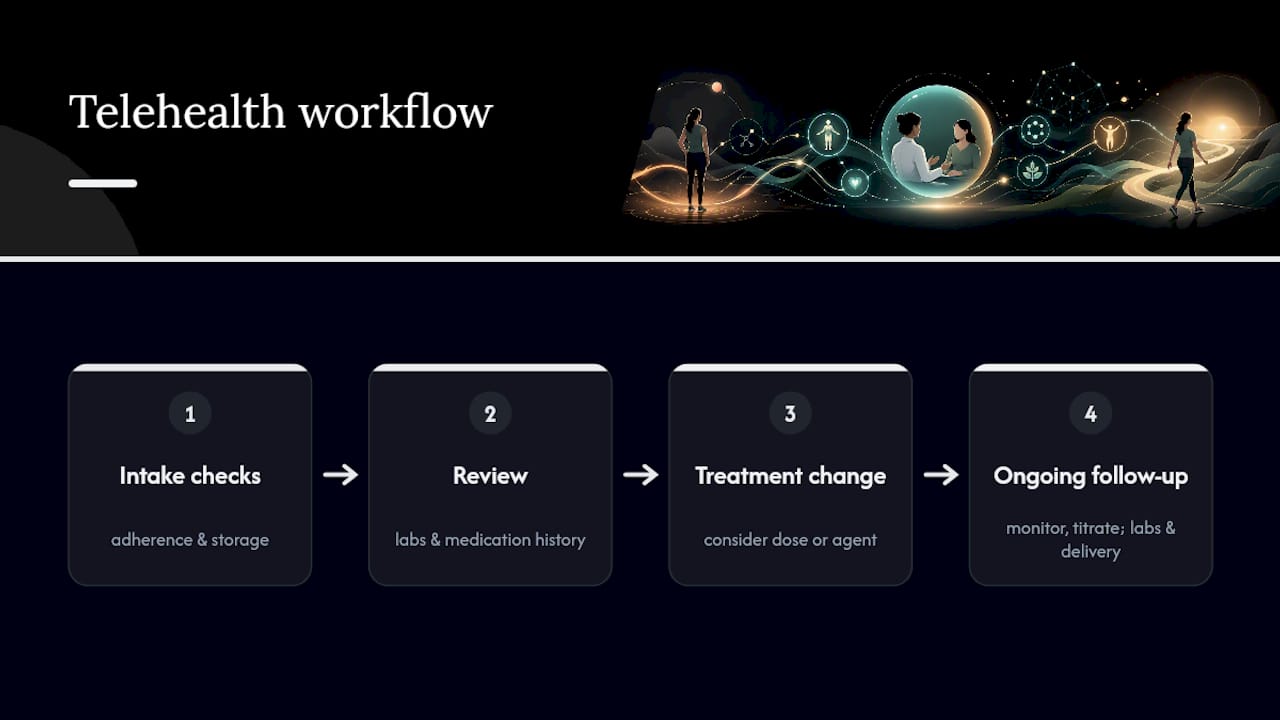
A clinician-guided plan turns this checklist into an actual workflow. Hypergevity’s intake process starts with an adherence and storage check, followed by lab review and a medication history before any dose or agent change is considered. Ongoing follow-up lets remote clinicians track side effects, adjust titration, or discuss switching agents as your response evolves, with lab integration and direct-to-door delivery removing the friction of in-person visits.
A Plateau Is a Decision Point, Not a Failure
A plateau tells you it’s time to reassess, not that the treatment failed. The priority is ruling out reversible causes first, protecting muscle mass while you wait for answers, and resisting the urge to make a unilateral change. Talk to your clinician about targeted labs and a tailored adjustment plan before altering your dose or stopping treatment.
— Hypergevity
Get a Clinician-Guided Plan for Your Next Step
Hypergevity gives you what a plateau actually calls for: a licensed clinician reviewing your labs, adherence, and options, not a guess about whether to raise your dose or switch drugs on your own. The Medical Weight Loss program starts at $199 a month, with flat pricing, no insurance requirement, and direct-to-door delivery once your plan is set.

If your current dose has plateaued and you’re weighing a switch, Hypergevity offers both semaglutide at $199 a month and tirzepatide at $249 a month, with licensed providers evaluating which agent fits your labs and history. A telehealth visit starts with intake and a clinical review, not a prescription handed out automatically, and it’s built for people who want supervised, long-term management rather than a one-time fix. This is not a substitute for urgent or emergency care. Start with an eligibility check to see what your options look like.
Sources
This article draws on GLP-1 trial data (STEP, SURMOUNT), peer-reviewed weight-loss plateau modeling, and meta-analyses on regain after discontinuation.
- Physiology of the Weight Loss Plateau after Calorie Restriction, GLP-1 Receptor Agonism, and Bariatric Surgery
- Tirzepatide weight-loss vs semaglutide in SURMOUNT
- Systematic review and meta-regression of weight regain after GLP-1RA cessation
FAQ
How Do You Break a Plateau on a GLP-1?
Start by confirming adherence, injection technique, and pen storage, then ask your clinician to review labs like TSH and HbA1c to rule out reversible causes. If those check out and you’re at your maximum tolerated dose, options include continuing at a stable maintenance dose or discussing a switch to a higher-efficacy agent like tirzepatide.
How Long Can a GLP-1 Plateau Last?
A plateau can persist for months if the underlying dose and lifestyle factors stay unchanged, since the body has settled into a new defended weight. Most patients see plateaus emerge in the 12 to 18 month range, and it typically takes a dose change, agent switch, or resolved medical issue to restart progress.
What Should You Do If You Plateau on Semaglutide?
Confirm you’ve reached the maximum tolerated dose before assuming the plateau is permanent, since many patients stall mid-titration. If you’re already at full dose, talk to your clinician about a maintenance plan or a switch to tirzepatide, which has shown greater average weight loss in head-to-head trial data.
What Should You Do When a GLP-1 Stops Working?
First rule out treatable causes: missed doses, medication interactions, new thyroid issues, or poor sleep quality. Never stop the medication abruptly on your own, since discontinuation is linked to rapid weight regain within a year; instead, schedule a review with your prescriber to discuss dose or agent changes.
Does Hypergevity Help With a GLP-1 Plateau?
Yes. Hypergevity’s clinician-guided Medical Weight Loss program includes adherence review, lab testing, and medication management for patients whose progress has stalled, with plans starting at $199 a month.